Role: Technical Game Designer
Core Focus: Procedural Animation, Inverse Kinematics, Gait Algorithms, Game Feel
Engine & Tools: Unity, C#, 2-Bone IK
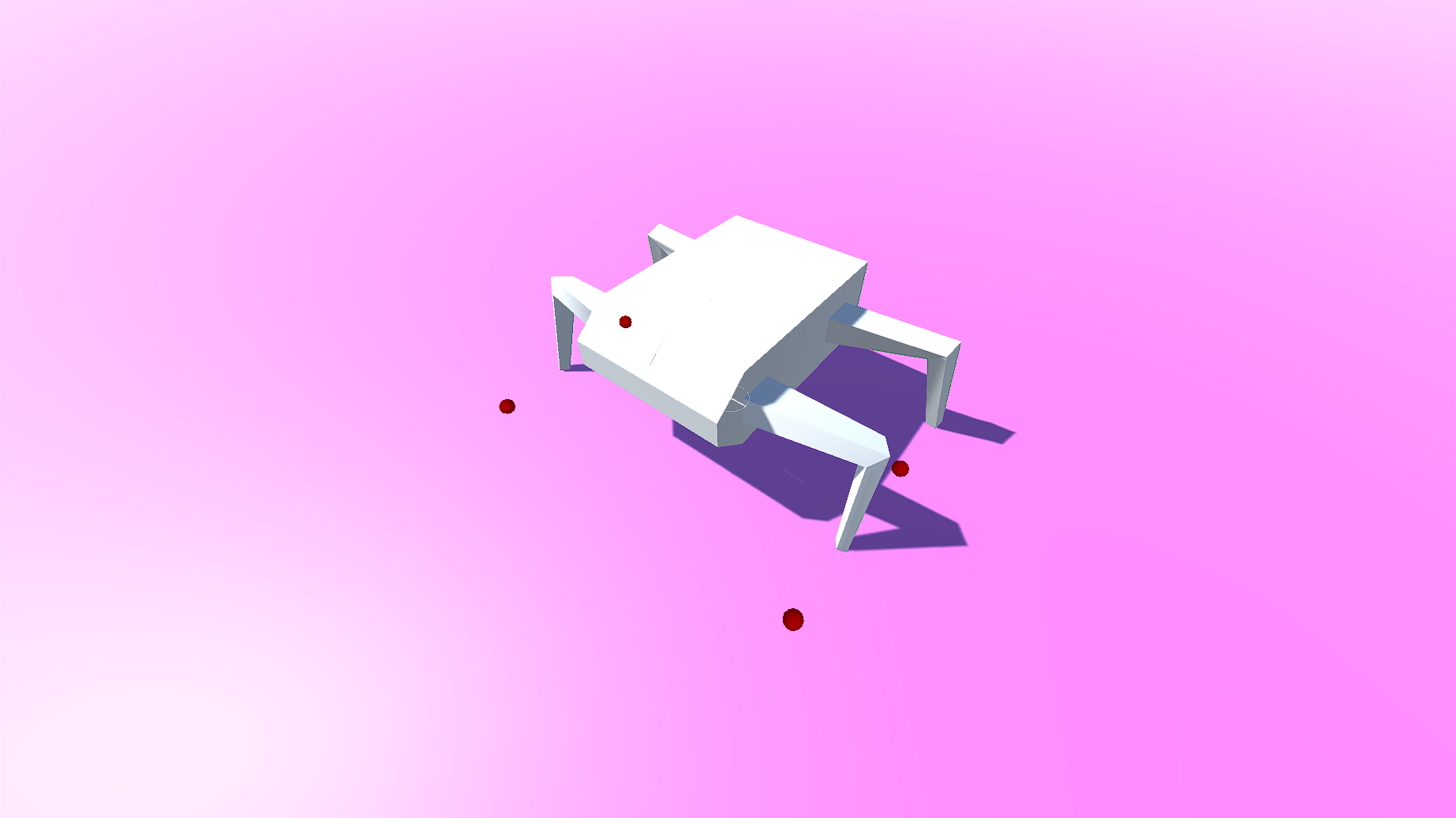
Responsive Control Through Procedural Animation
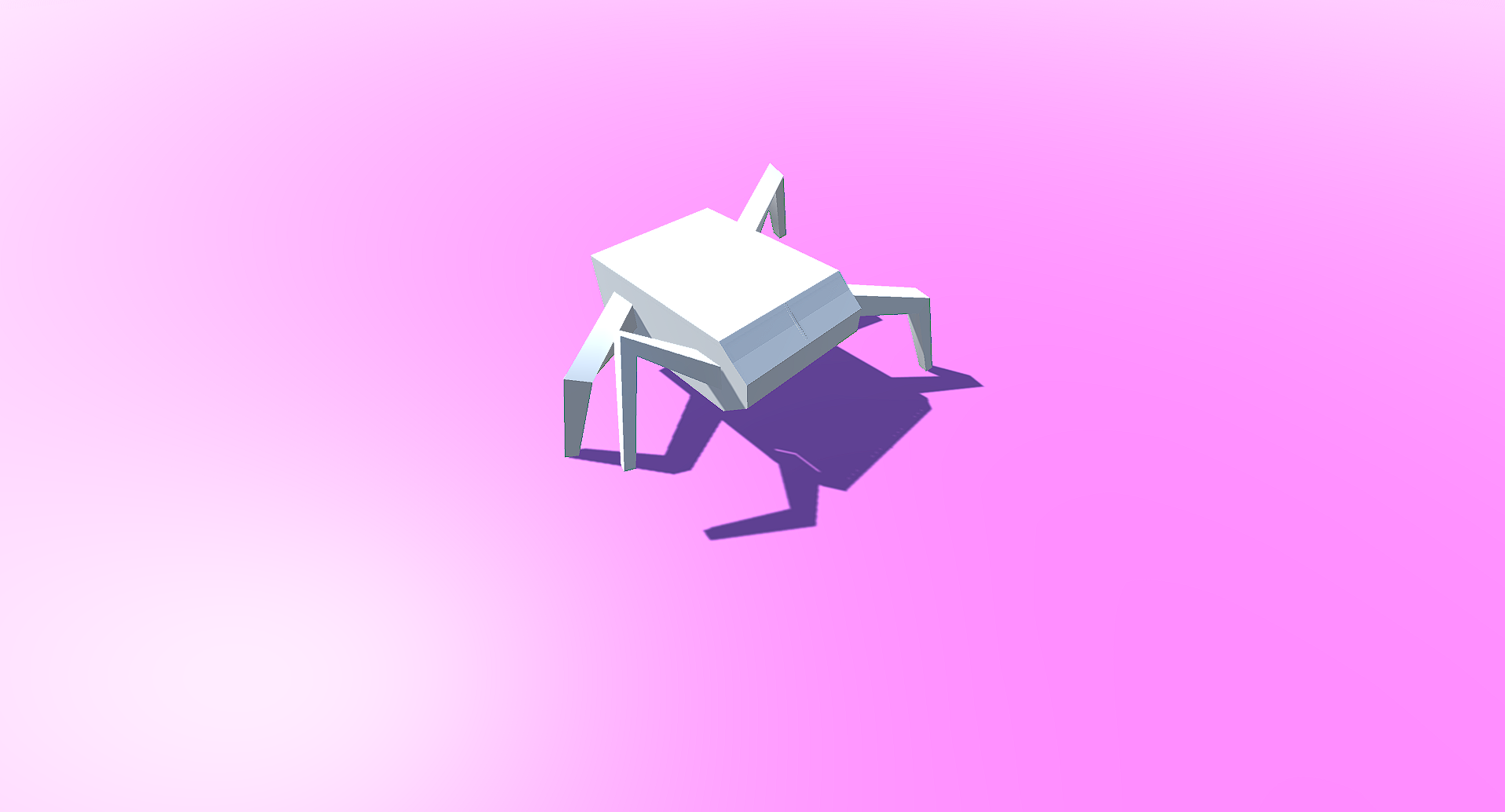
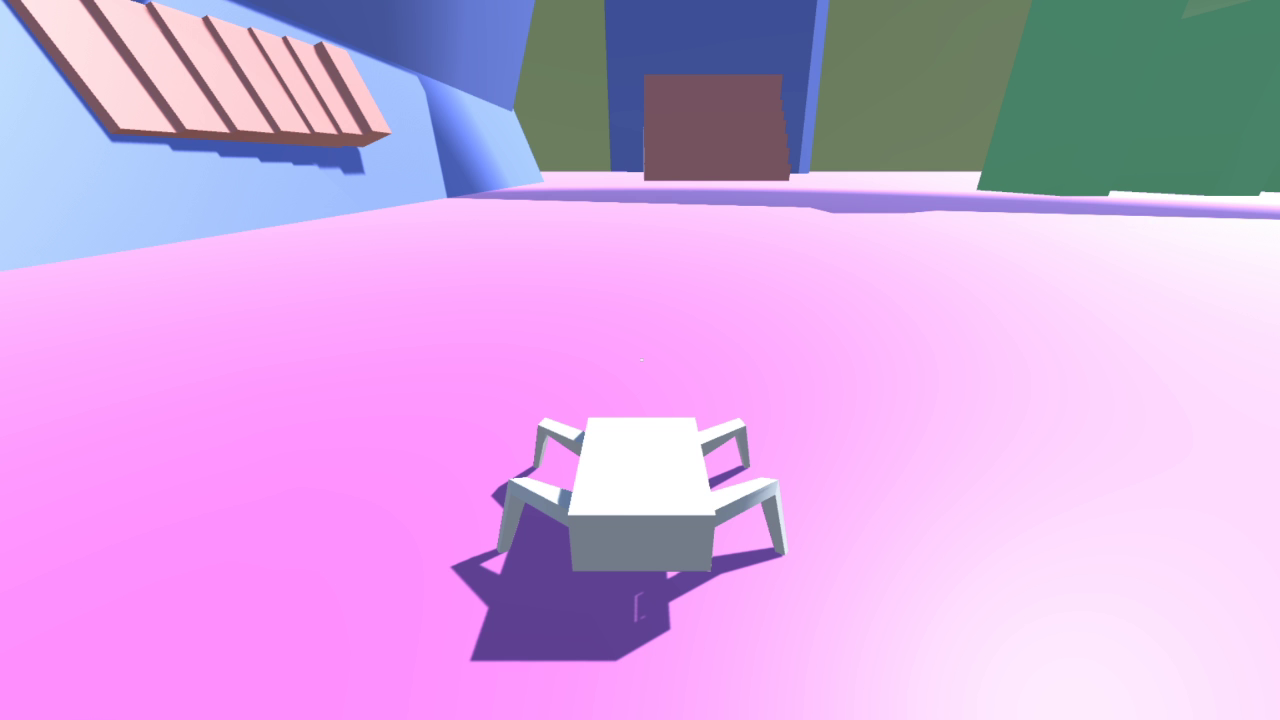
Traditional baked keyframe animations fall apart when multi-legged creatures traverse uneven surfaces. The objective of this prototype was to engineer a fully procedural locomotion system for various multi-legged entities, rather than static animation clips. The result is a creature controller that organically traverses ledges, dynamic obstacles, and varying elevations with natural weight and momentum.
Gait Orchestration & Alternating Tripod Systems
Locomotion relies on a sequenced alternating gait. Rather than moving legs independently, the controller groups opposing leg pairs into synchronized phases.
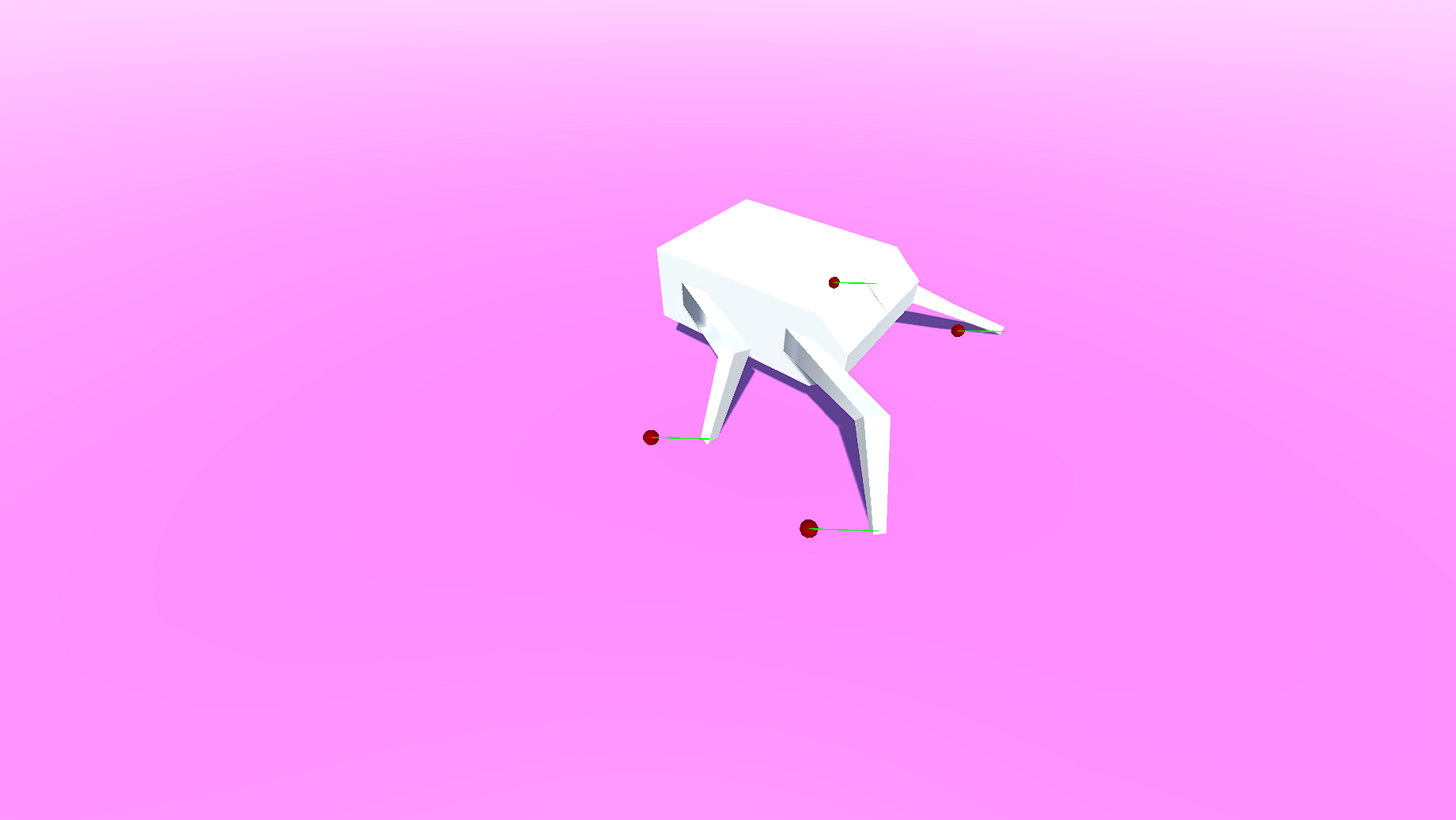
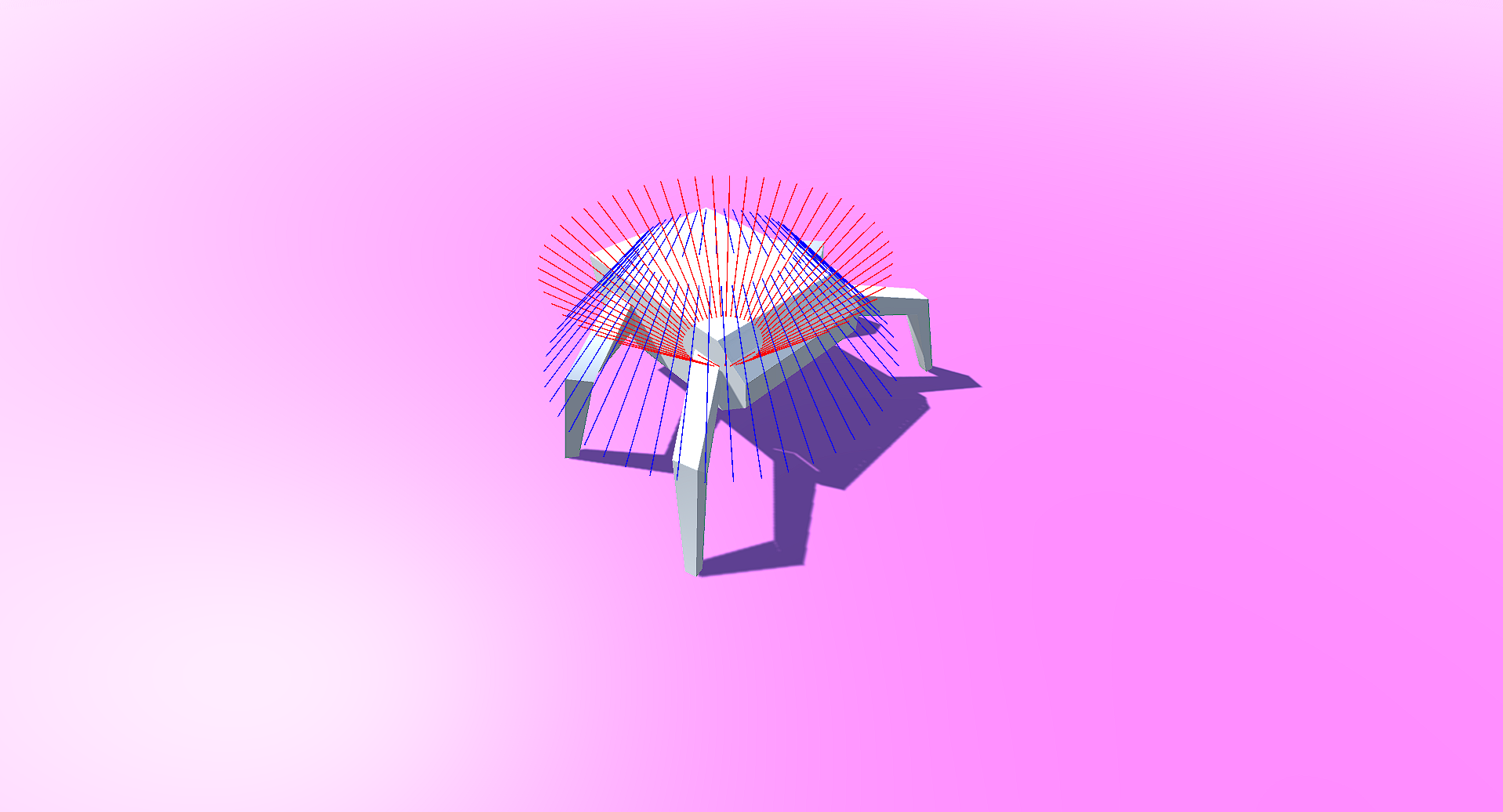
Predictive Raycast Sampling: Each leg casts predictive rays along the entity’s velocity vector to identify viable foot placements before the step triggers.
Parabolic Step Trajectories: Once the distance threshold between the current foot position and the ideal target exceeds a limit, the foot interpolates along a parametric Bézier arc, introducing tactile ground clearance.
Adaptive Body Orientation: The main thorax dynamically adjusts its height and pitch based on the average normal vector and elevation of all grounded limbs, preventing clipping on sharp inclines.
Result
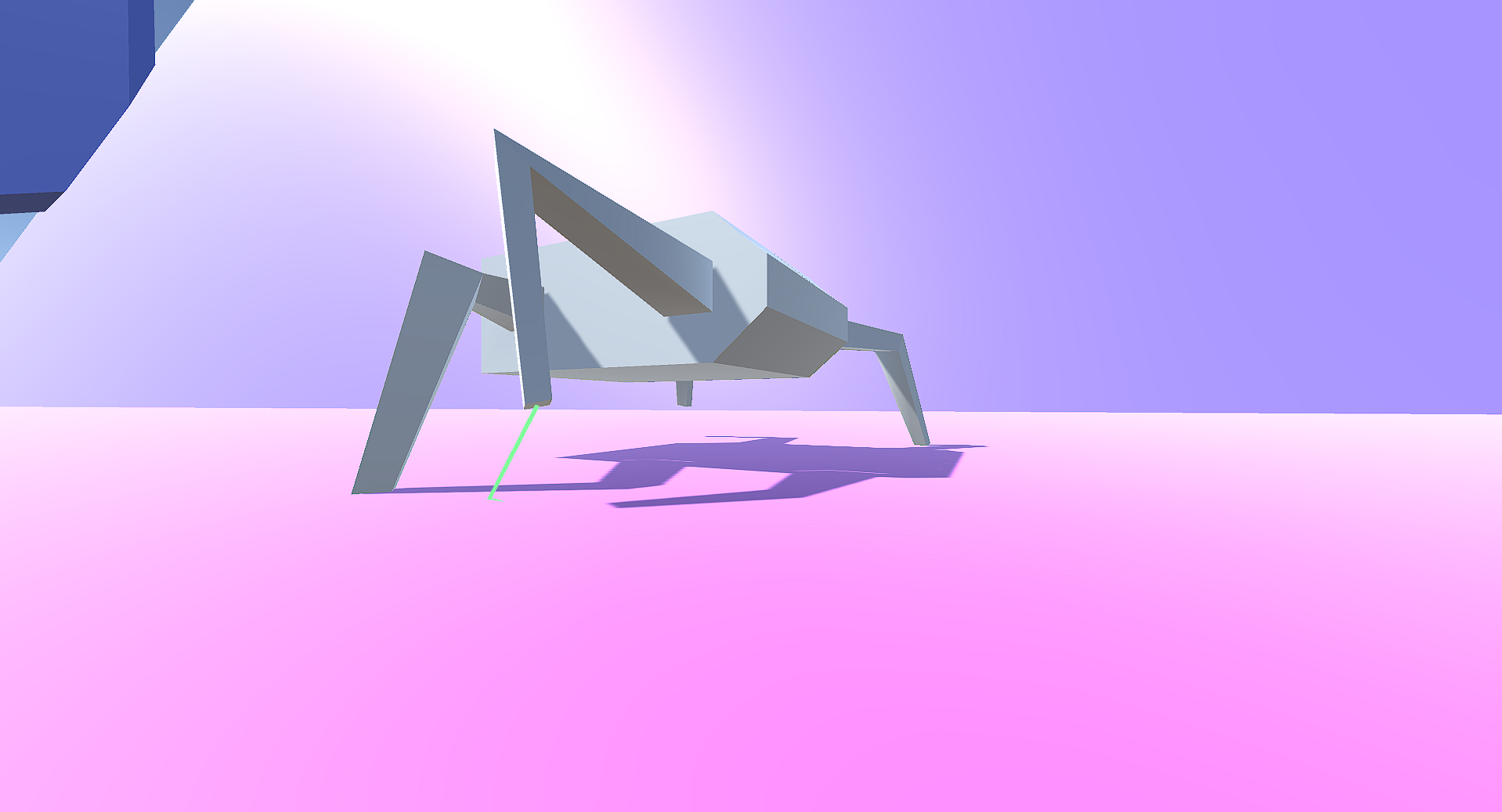
While procedural spider controllers are common, most break down when moving beyond 2.5D or standard ground planes. A key breakthrough in this controller was enabling seamless 360° traversal—allowing the creature to scale vertical walls and navigate inverted ceilings without losing orientation.
Solving this required executing all raycasts, gait phase checks, and leg-target interpolations strictly within the entity’s local coordinate space before transforming them into global coordinates. This approach eliminated sign-inversion errors when crossing inverted axes, resulting in a robust, multi-surface locomotion system capable of handling complex geometry.