Role: Game Designer
Genre: Strategy, Board Games, Systems Design
Core Focus: Information Symmetry, Strategic Pacing, Heuristic Balance
Platforms: Physical Prototyping & Manufacturing
What is Axis?
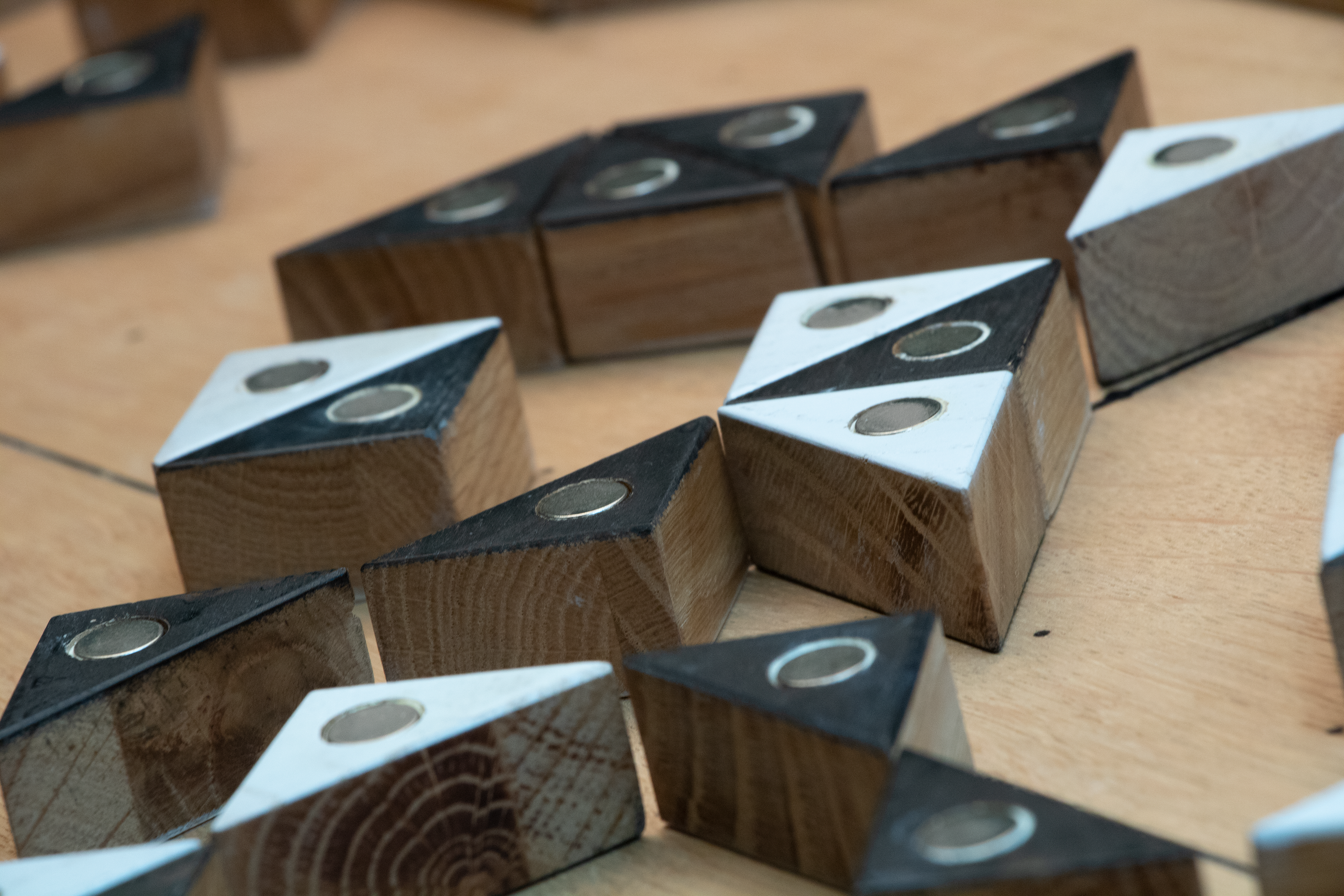
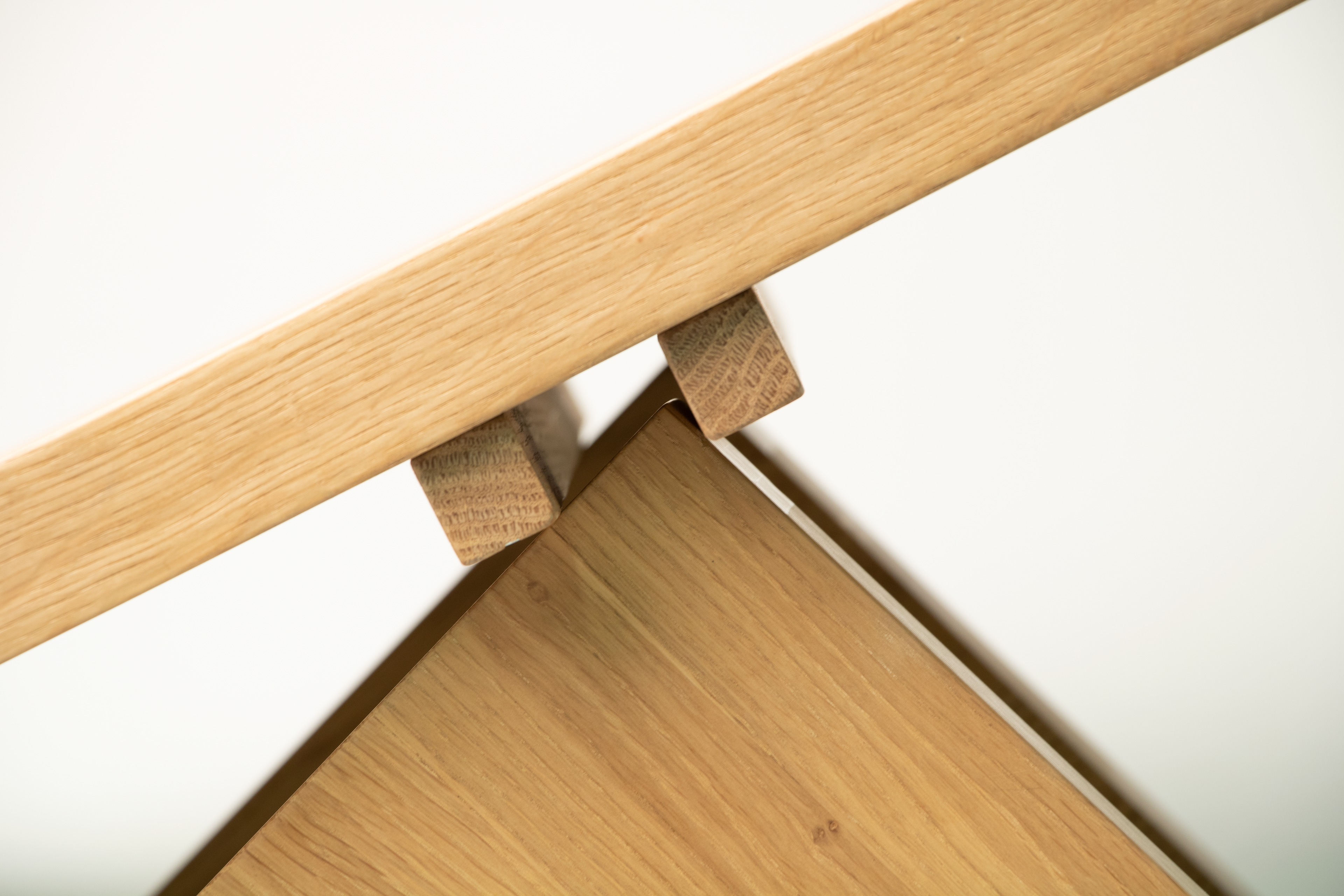
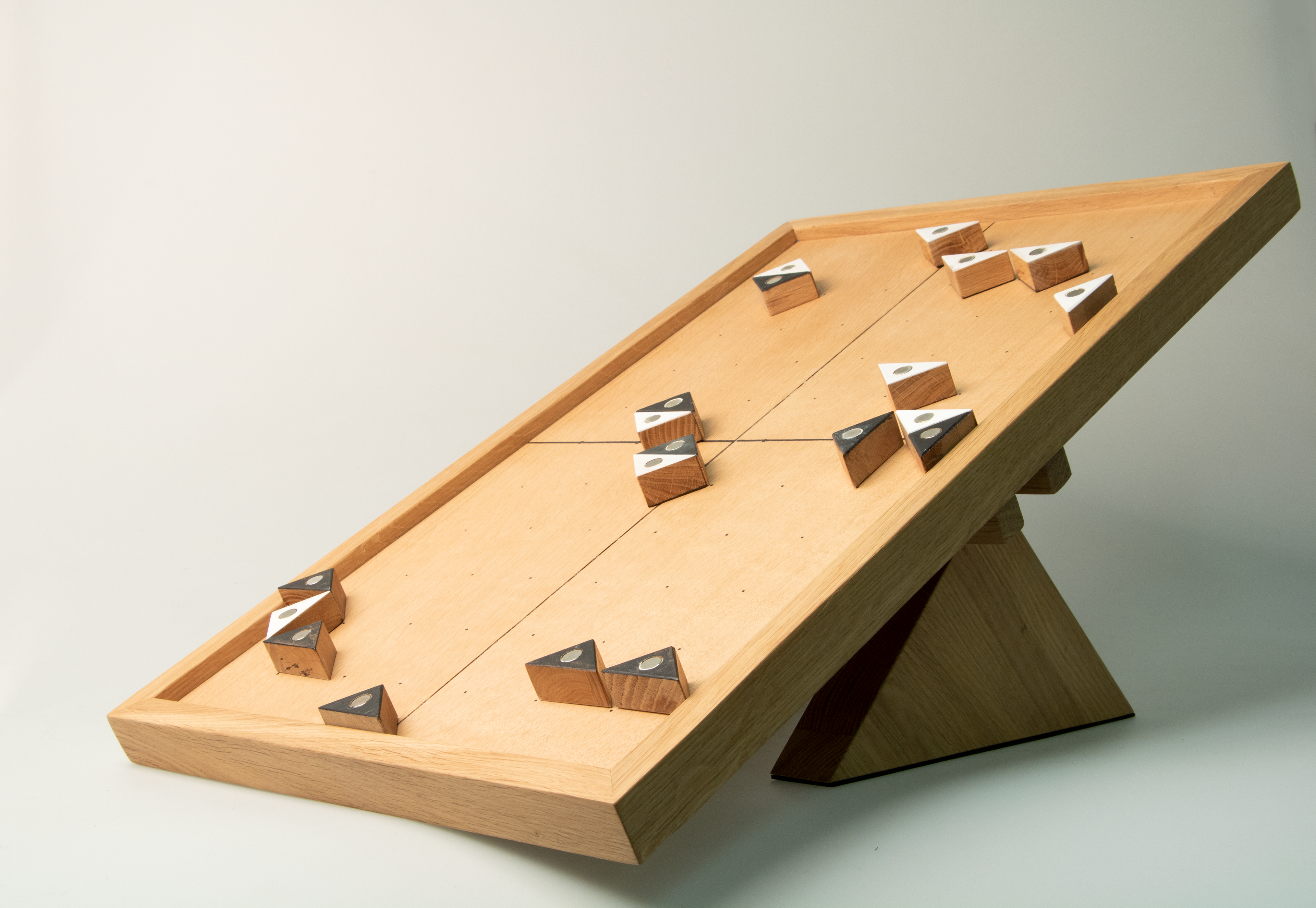
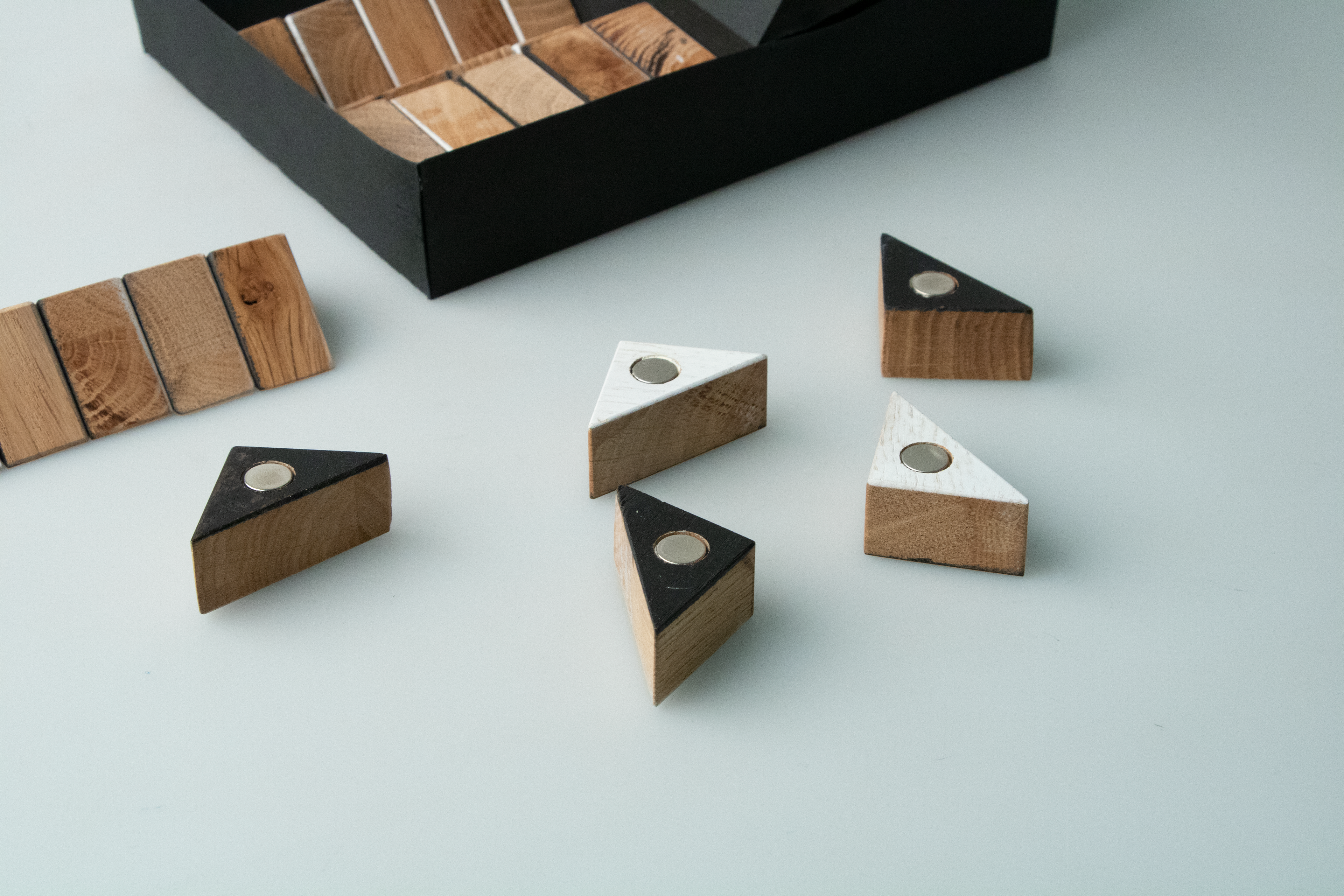
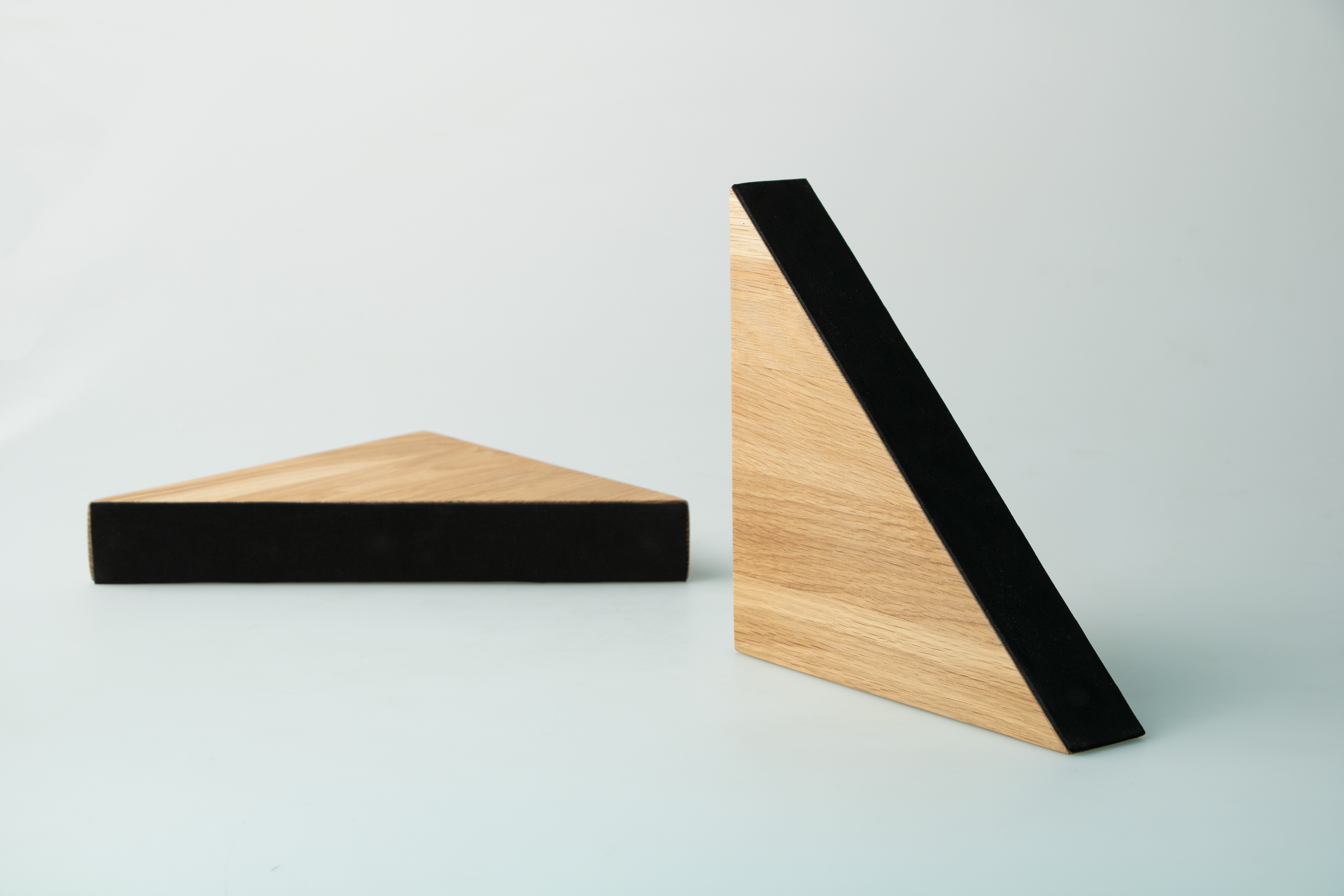
Axis is a tabletop game for 2 players in which through tilting of the board and placement of tiles, a puck must be kept on one's side of the board to win. Inspiration for the game were traditional strategy games like chess and go. The goal was to design a game with rules that are as easy to understand as possible and in which all outcomes were determined by gravity.
Axis was developed in collaboration with the designer Dag Eberhart.
Maximizing Decision Density Through Minimal Rulesets
Complex strategy games frequently fall into the trap of rules bloat. Layering complicated mechanics, lengthy rulebooks, and edge cases to generate synthetic depth. The objective with Axis was the inverse: engineering a spatial strategy game that achieves rich, multi-turn emergent depth using a lean, self-evident ruleset. The design challenge lay in balancing perfect information, spatial movement constraints, and competitive counter-play while ensuring replayability over hundreds of games.
1. Tilting the Board (The Core Mechanic)
While the strategic moment of the game is placing ones tiles, the core experience and wow-moment of the game is the Tilting of the board.
This seesaw tilting at the end of every turn had to be the Eureka-moment of every new player, when gravity added complexity to a simple ruleset.
2. Perfect Information & Heuristic Readability
Building the board state to be 100% visible for both players, while being exposed to gravity-based randomness, meant that every turn ended in an exciting moment. Will the puck land where I expected it to land? Or did I miss something?
The game board's geometry and visual affordances allow players to mentally project 2–3 moves ahead, so that surprises never feel unfair.
3. Rapid Physical-to-Digital Paper Prototyping
Rapid tabletop paper prototypes to stress-test corner cases, first-turn advantages, and stalemate conditions allowed us to iterate in 10-minute cycles.
Through balancing models we ensured match lengths consistently resolve within a focused 15–20 minute window, maintaining high engagement and immediate rematch appetite.
Why This Matters for Commercial Game Design
Elegant systems are defined not by how much you can add, but by how much you can strip away while preserving meaningful choices. Whether tuning a turn-based tactical roguelike or balancing an asymmetric PC card battler, the foundational principles of Axis apply directly: eliminate mechanical noise, make player choices consequential, and engineer mechanics that naturally check and balance one another.